
A/B Testing Product Photos: How AI Makes It Practical
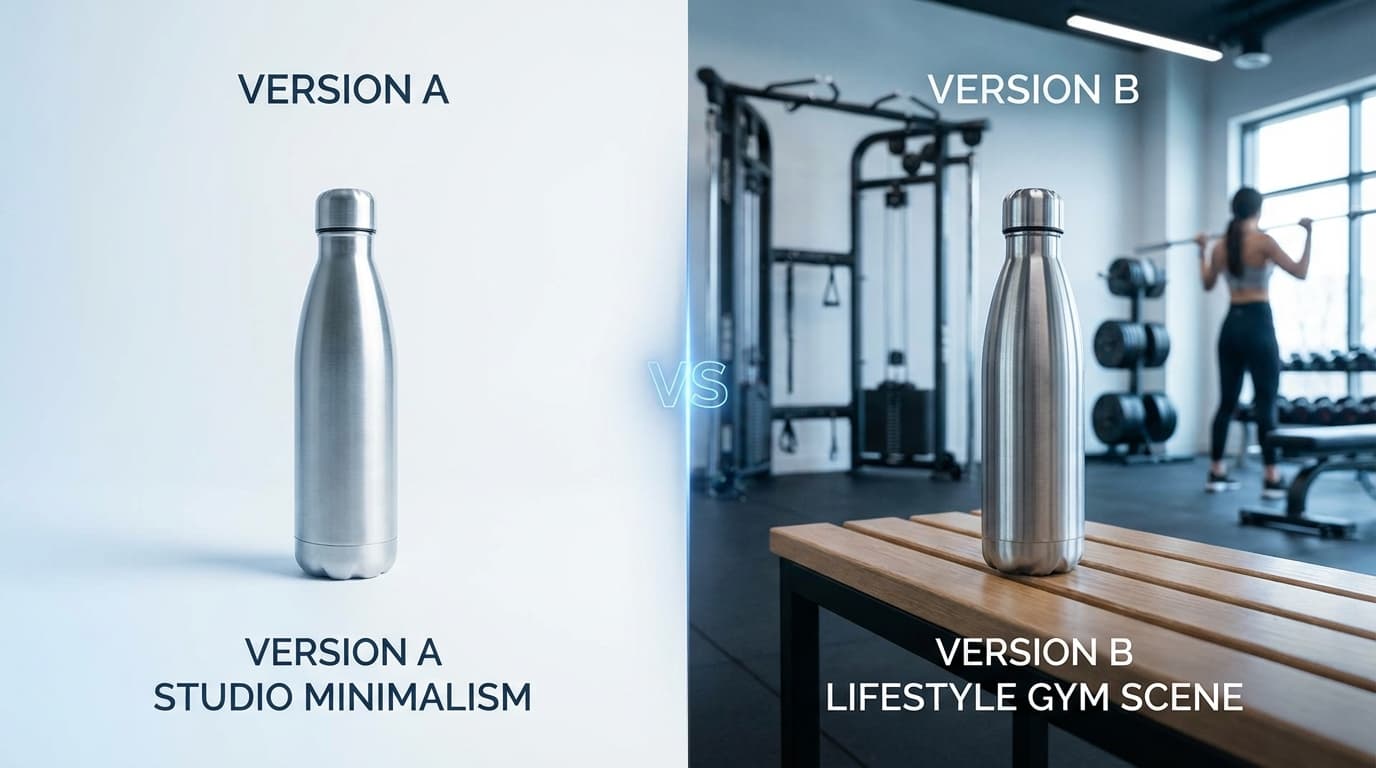
AI makes A/B testing product photos practical by generating multiple variants of the same product for almost nothing, removing the cost that always made image testing impractical. Instead of shooting three versions of a product in three scenes at triple the cost and picking one on a hunch, you generate several variants and let real conversion data choose the winner. Product photography has always been one of the biggest levers for e-commerce conversion — now it is finally testable.
AI changes the economics entirely. Generating five variants of a product image costs almost nothing — which means you can finally test what actually works.
What to Test
Not all image variations are worth testing. Focus on variables that research and experience show actually move conversion rates:
Background and scene
This is the highest-impact variable. Test:
- White/clean background vs. lifestyle scene
- Indoor scene vs. outdoor scene
- Minimal styling vs. props and context
Use Recreate to generate the same product in multiple scenes quickly.
Lighting mood
Different lighting creates different emotional responses:
- Bright, even lighting — Clean, trustworthy, informational
- Warm, directional lighting — Premium, aspirational, editorial
- Dramatic shadows — Bold, luxury, attention-grabbing
Use Relight to create lighting variants from the same source image.
Camera angle
- Straight-on vs. three-quarter view vs. overhead
- Close-up detail vs. full product in context
Use Multiple Angles to generate different viewpoints from a single photo.
Hero image selection
Your first listing image gets the most views. Test which variant performs best in that slot — you might find that a lifestyle image outperforms a clean product shot as the hero, or vice versa.
How to Run the Test
Step 1: Generate variants
For each product, generate 3-5 image variants that each change one variable. Don't change everything at once — test one variable at a time so you know what caused the difference.
Step 2: Set up the split
Most e-commerce platforms support A/B testing natively or through apps:
- Amazon — Manage Your Experiments (available for brand-registered sellers)
- Shopify — Apps like Neat A/B Testing or Google Optimize
- Custom stores — Feature flags or A/B testing services
Show variant A to 50% of visitors and variant B to the other 50%. Run the test on your highest-traffic products first for faster statistical significance.
Step 3: Measure what matters
Track these metrics for each variant:
- Click-through rate (CTR) — From search results or category pages to the product page
- Conversion rate — From product page to add-to-cart or purchase
- Return rate — Lower returns suggest the image set expectations accurately
A variant that boosts CTR but also boosts returns isn't actually winning.
Step 4: Reach significance before deciding
Don't call a test after two days. You need enough traffic to be statistically confident. General rules:
- Minimum 1,000 visitors per variant before drawing conclusions
- Run for at least 7 days to account for day-of-week effects
- Use a significance calculator — don't eyeball percentage differences
Patterns That Usually Win
Based on e-commerce research and common test results:
- Lifestyle hero images tend to outperform white-background hero images for CTR, especially in fashion, home, and lifestyle categories
- White background images still win for product detail and comparison shopping (electronics, tools, commodity products)
- Multiple images beat fewer images — Listings with 5+ images consistently outperform those with 1-3
- Consistent lighting across a listing's image set improves perceived quality
These are starting hypotheses, not universal truths. Your specific products, audience, and platform may behave differently — that's why you test.
The AI Testing Workflow
Here's the practical loop:
- Pick your top 10 products by traffic
- Generate 3 image variants per product using Create or Recreate
- Run A/B tests on each product for 2-4 weeks
- Apply winning patterns to the rest of your catalog
- Re-test quarterly as customer preferences and platform algorithms evolve
The total cost of generating 30 test images with AI is negligible. The value of knowing which image style converts 15% better across your entire catalog is enormous.
For a complete workflow on generating these variants efficiently, see our guide on batch product photography with AI.