
AI Product Photography for Social Media: Instagram, TikTok, and Pinterest
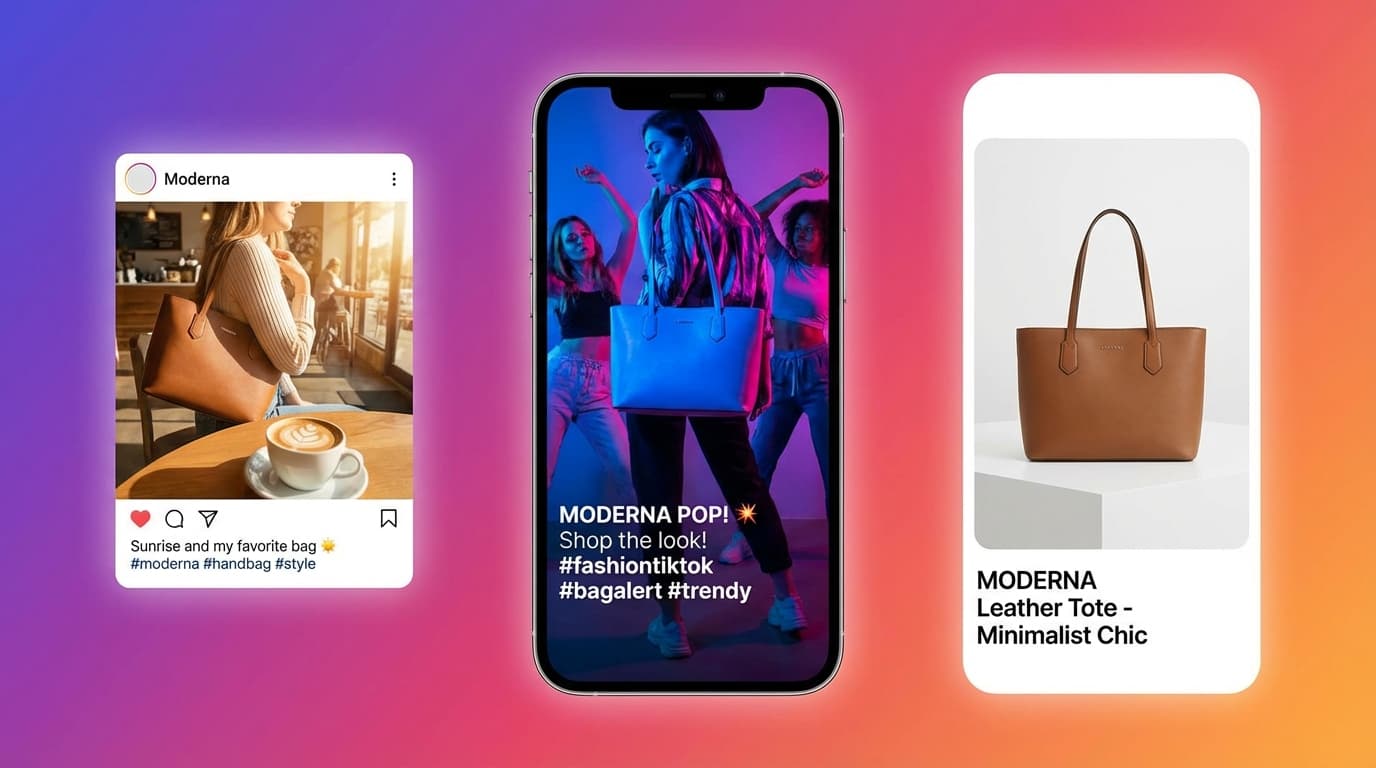
Social media product photos aren't the same as e-commerce product photos, and AI lets you generate platform-optimized versions from a single source image: aesthetically curated lifestyle shots for Instagram, bold high-contrast verticals for TikTok, and tall, clean vertical pins for Pinterest. Your Amazon listing needs a clean white-background image; your Instagram feed needs an image that stops someone mid-scroll. Here's how to produce both — and hit each platform's ideal specs — without separate shoots.
Platform-by-Platform Requirements
What works: Lifestyle-heavy, aesthetically curated images. Instagram is a visual platform first — products need to look like they belong in someone's aspirational life, not in a catalog.
Image specs: - Square (1:1) for feed posts — 1080x1080px minimum - Portrait (4:5) for maximum feed real estate — 1080x1350px - Stories and Reels covers — 1080x1920px (9:16)
AI workflow: 1. Remove Background on your product photo 2. Use Recreate to place the product in lifestyle scenes that match your brand aesthetic 3. Generate multiple scene variants — rotate them through your feed for visual variety 4. Use style references in Create to maintain a consistent color palette across posts
Tips: - Warm, golden-hour lighting consistently outperforms flat studio lighting on Instagram - Textured backgrounds (marble, wood, linen) perform better than solid colors - Leave space for text overlays if you plan to add captions or promo text
TikTok
What works: Bold, attention-grabbing images that read clearly on small screens. TikTok thumbnails and product showcases need high contrast and immediate visual impact.
Image specs: - Portrait (9:16) for video thumbnails and shop listings — 1080x1920px - Product images for TikTok Shop — minimum 600x600px, white background preferred
AI workflow: 1. Generate dramatic, high-contrast product images using Create with style references that emphasize bold colors 2. Use Relight with strong directional lighting for thumbnail images 3. For TikTok Shop, keep clean white-background versions alongside lifestyle variants
Tips: - TikTok audiences skew younger — trendy, colorful, energetic styling resonates - Product-in-hand or product-in-use contexts outperform static product shots - High contrast and saturated colors grab attention in the fast-scrolling feed
What works: Tall, vertical images with clean composition and clear product focus. Pinterest is a visual search engine — images need to be both aesthetically pleasing and informative.
Image specs: - Vertical (2:3) recommended — 1000x1500px - Minimum width 600px - Tall pins (1:2.1) get more saves but can feel unnatural
AI workflow: 1. Generate vertical-composition product images using Create 2. Lifestyle scene placement with Recreate works exceptionally well on Pinterest 3. Generate seasonal variants — Pinterest users plan ahead, so holiday and seasonal content performs months before the actual date
Tips: - Pinterest rewards specificity — "minimalist ceramic vase on oak shelf" outperforms generic product shots - Text overlay on images increases save rates for how-to and informational content - Create multiple pins per product with different scenes — Pinterest rewards fresh content
Cross-Platform Efficiency
The expensive mistake is creating completely separate images for each platform. Instead, build a workflow that generates platform variants from one source:
- Start with a high-resolution lifestyle image from Create or Recreate
- Crop to platform aspect ratios — One landscape scene can yield a square Instagram crop, a vertical Pinterest crop, and a 9:16 TikTok crop
- Adjust lighting per platform — Use Relight to create warmer versions for Instagram and higher-contrast versions for TikTok
- Upscale everything with Upscale as the final step
Content Calendar Integration
AI generation speed means you can keep up with a daily posting schedule:
- Monday: Generate product hero shots for the week's featured items
- Wednesday: Create scene variants for mid-week engagement posts
- Friday: Generate weekend lifestyle imagery
Batch your generation sessions by platform to keep styling consistent within each channel.
Measuring What Works
Track engagement per platform and per image style:
- Instagram — Save rate and share rate matter more than likes for product discovery
- TikTok — Watch time and click-through to product pages
- Pinterest — Save rate and outbound click rate
Use this data to refine which scene types, lighting styles, and compositions you generate going forward. For more on testing image variants systematically, see our guide on A/B testing product photos.